As part of their transition to retirement, Roscoe and Elizabeth Thomas were looking for ways to cut their living costs. They already had chooks, bees and 30-odd fruit trees in their Lindisfarne garden, and had insulated the ceiling and the floor of their house, which made a lot of difference to the cost of their heating.
Lindisfarne locals install solar system to cut retirement costs

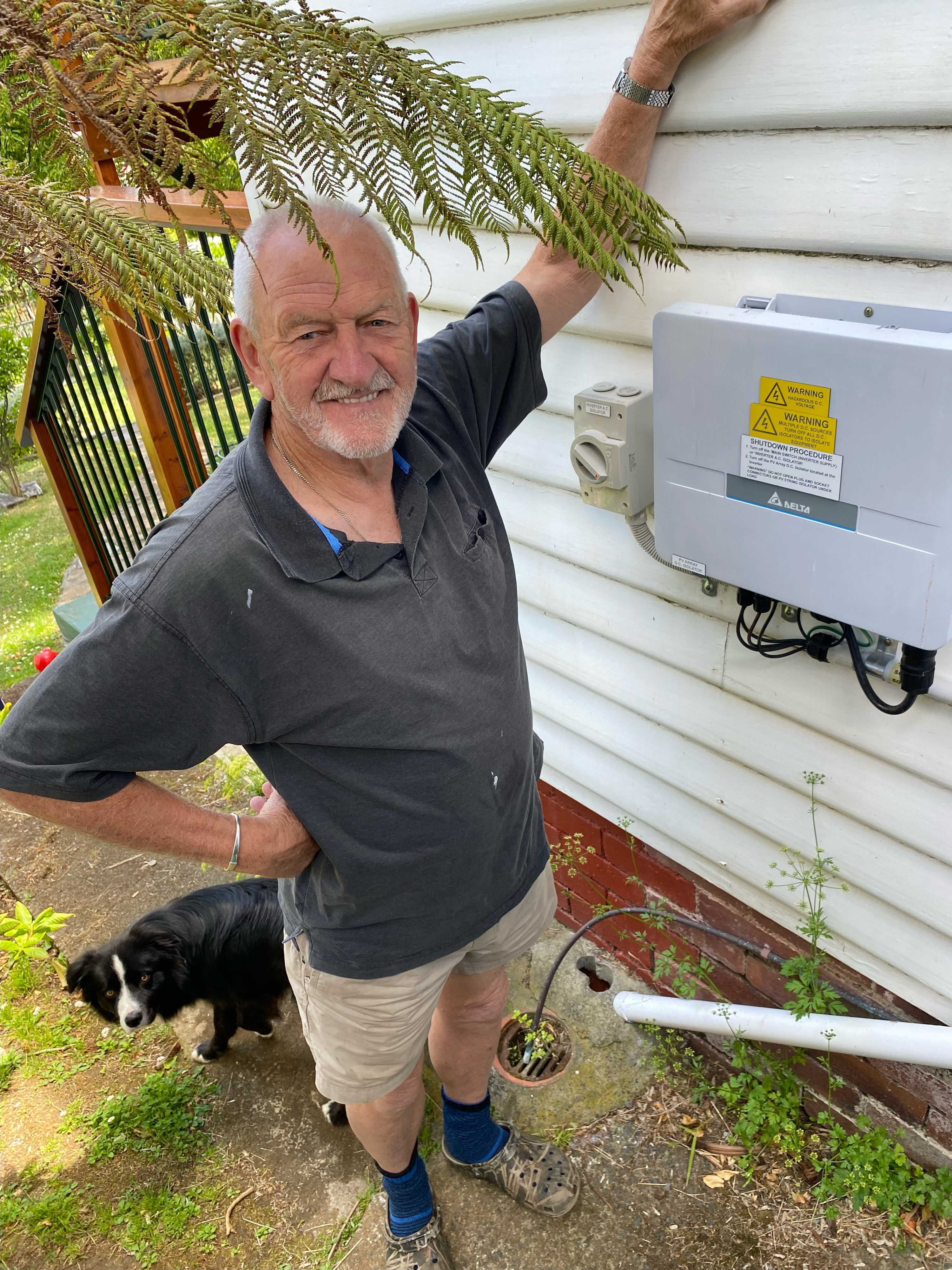
‘The next logical step,’ said Roscoe, ‘was solar panels. I spent a lot of time and energy trying to figure out which were the best ones. Who could we trust, and who were the snake oil salesmen?’
He approached five different companies for quotes, and eventually settled on a 6.5 kW system with monocrystalline panels. ‘At the time,’ he said, ‘they were the best. In another few years they’ll probably be outdated, but if you get the right system, it doesn’t matter, they’ll still be producing the same amount of power.’
The Thomases switched on their solar on July 9, 2021, and haven’t had a power bill since.
They have been pleasantly surprised by how little they have had to modify their energy use to fit the amount of power they are producing. ‘We’re careful with things like using the dishwasher during the off peak period,’ said Roscoe. ‘But we run three big freezers and two normal freezers, we shower whenever we feel like it, and we had somebody living downstairs who showered at least once a day, sometimes twice.’
At one point they considered adding a battery. ‘But if we never get a power bill, why would we put in a battery?’
As for the monocrystalline panels, they’re going strong. ‘They need cleaning every 12 months or so because of dust and creosote build up. But we had a hail storm here a couple of weeks ago, and they didn’t get a mark on them. I know someone who’s got pock marks on theirs and once you’ve got the pock marks, your efficiency goes right down.’
Back in 2021, the system cost the Thomases about $5,500. ‘The approximate cost of power we would have used over that period would be between $7,000 and $8,000. It paid for itself in the first two years.’
When asked what advice he’d give to people thinking about solar panels, Roscoe said, ‘You’ve got to do your research. Don’t listen to snake oil salesmen.’
‘And don’t wait as long as we did. We hesitated probably 18 months too long because of the initial cost. But if you’re going to stay in the house for any more than three or four years, put it on. Even if you’re only staying there for 18 months, it’s a good selling point.’
‘Every time we get a zero power bill, I love it.’
Roscoe and Elizabeth Thomas have been chosen by Clarence Climate Action as this month’s Climate Champions.
Eastern Shore Sun, January 2026, page 7